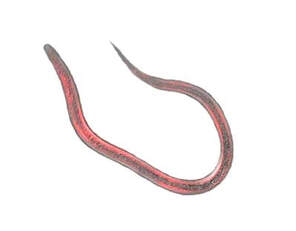
We study the neural basis of sensory-driven behaviors in parasitic nematodes and the free-living model nematode C. elegans. Our research lies at the interface of parasitology and neurobiology. The overall goals of our research are to understand how parasitic worms use sensory cues to locate and infect human hosts, and how sensory neural circuits are modulated to drive experience-dependent and context-appropriate behaviors.
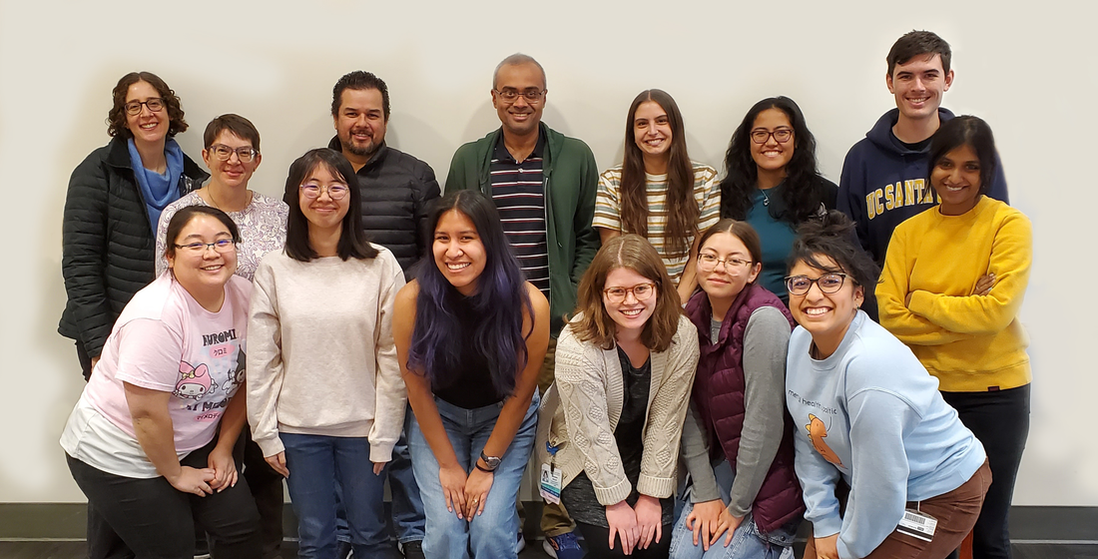
The Hallem lab is committed to fostering a diverse and inclusive lab environment, where everyone is encouraged, heard, and valued. We welcome lab members of all identities, backgrounds, beliefs, and experiences. Please see our diversity statement.
Our approach
A major focus of the lab is on how skin-penetrating nematodes respond to host-emitted sensory cues. For this work, we use the human-parasitic nematode Strongyloides stercoralis and the closely related rat-parasitic nematode Strongyloides ratti as model systems. We are investigating the behavioral responses of S. stercoralis and S. ratti to host-emitted sensory cues, as well as the neural circuits and signaling pathways that underlie these responses. We are also studying the responses of the free-living model nematode C. elegans to the same sensory cues to better understand how the nervous system of a parasitic animal differs from that of a free-living animal. By comparing the responses of C. elegans to those of the Strongyloides species, which have similar sensory neuroanatomy but highly divergent behavioral repertoires, we are gaining insights into the specific features of parasite sensory neural circuits that drive parasitic behaviors. Finally, we are studying how sensory neural circuits are modulated to drive experience-dependent and context-appropriate behavioral responses, using both parasitic nematodes and C. elegans as model systems.